

FORHU's SCL Architecture Sets New Standard for AI Governance at VivaTech 2026
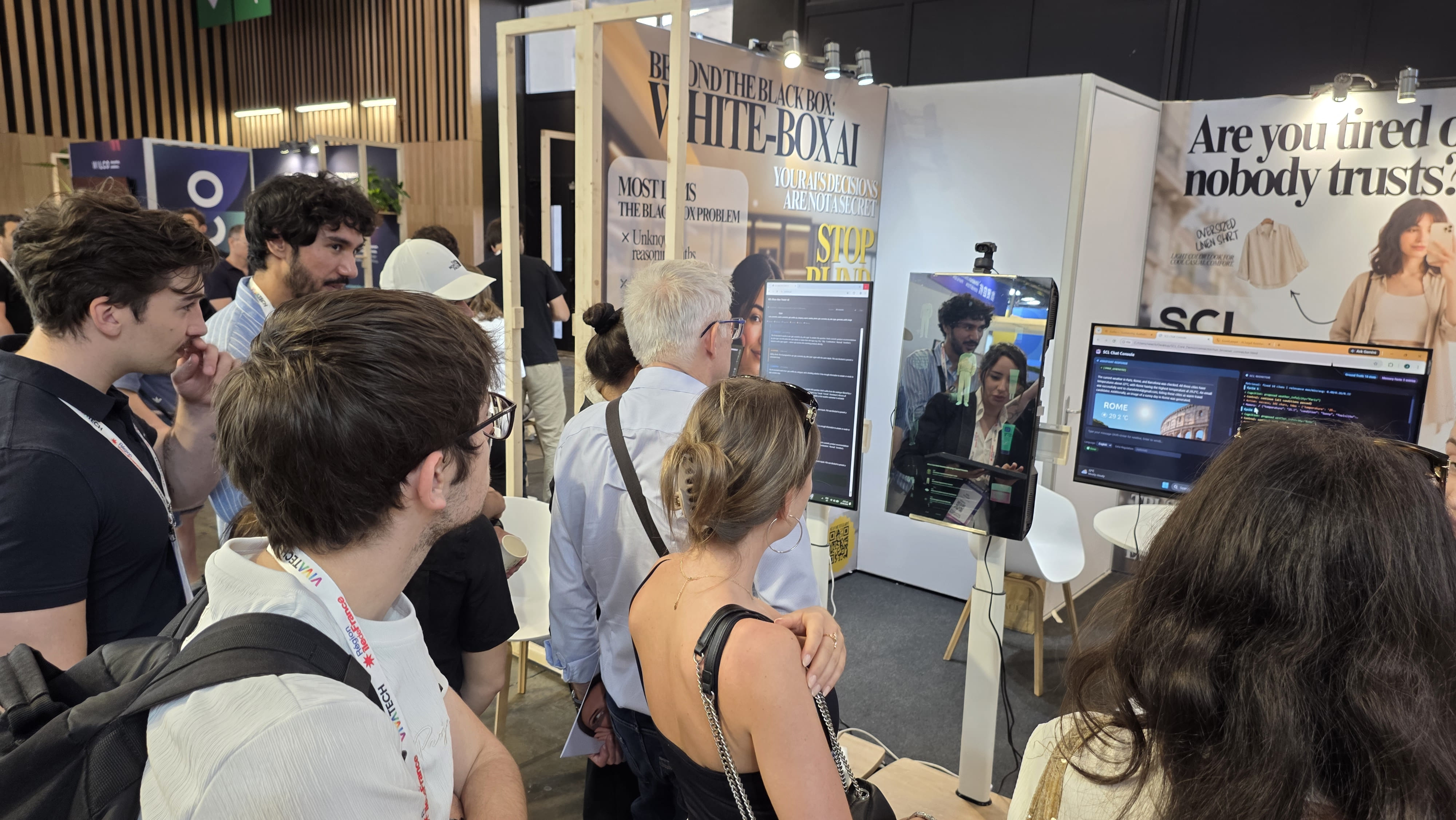
SCL Structure Cognitive Loop in Action at Vivatech
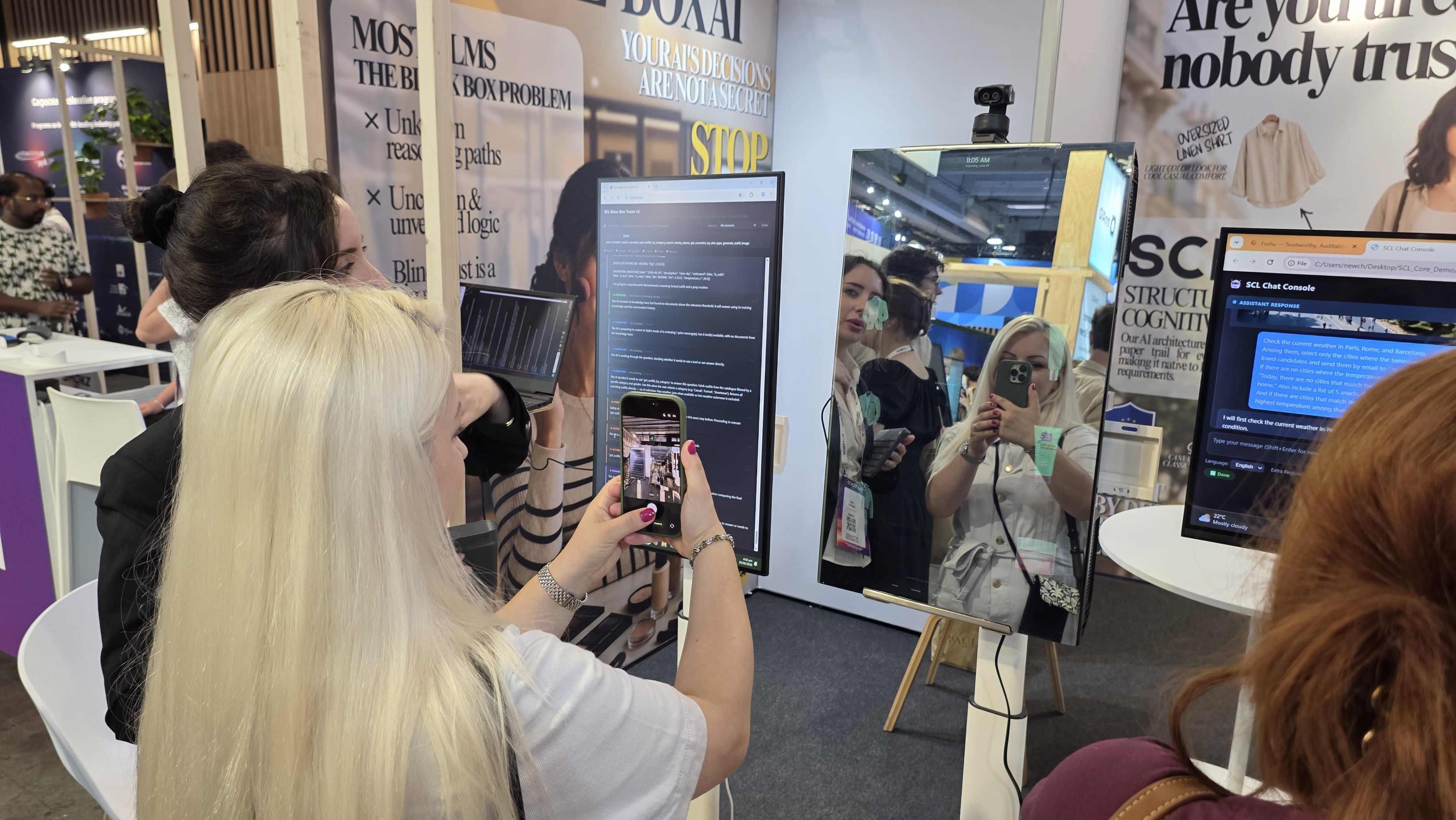
SCL Structure Cognitive Loop in Action at Vivatech

SCL Structure Cognitive Loop in Action at Vivatech
FORHU Inc. unveils SCL at VivaTech 2026, an "epistemic operating system" for accountable AI that aligns with the EU AI Act through structural transparency.
Operating from Hall 7.1, Booth 1J22, FORHU demonstrated that the definitive shift from opaque "Blackbox AI" to auditable Glassbox AI is now a technical reality. The SCL architecture's design revolves around a structured decision-making process, encapsulated in its five-step R-CC[H]AM loop: Retrieval, Cognition, Control, Action, and Memory. This approach ensures that AI behaviors are not only consistent but also explainable and auditable throughout the operational stages. The SCL cycle is positioned as an "epistemic operating system," moving beyond traditional AI functionalities; it not only provides output but meticulously documents the rationale behind each result delivered to users through a real-time Glassbox Trace. This feature caters to an increasing demand from organizations for transparency in AI applications, aligning closely with evolving regulatory expectations.
A noteworthy aspect of FORHU's presentation was its positioning against the idea of "hallucination-free" AI, a promise that has faced skepticism from enterprise buyers. Instead, FORHU introduced the concept of hallucination governance, designed to prevent unverified outputs from being executed. This proactive approach involves a structural “brake” system within the Control stage that ensures all AI-generated actions are both safe and grounded in verified facts. Attendees at the conference recognized this differentiation, highlighting the struggle of startups that fail to adequately address the security and integration of their AI solutions amidst growing public scrutiny.
During the showcase, Jun Shin, CEO of FORHU, shared a defining vision for the future of the industry:
“Trustworthy judgment is not obtained by tuning prompts or scaling models. It arises only when the conditions under which judgment is permitted are fixed by structure,” stated Jun Shin.
“At VivaTech, we are proving that trust in AI is not a feeling but a visible experience. We have built SCL to ensure that the authority to judge moves from the probabilistic model to the deterministic architecture itself . Performance is a race, but justification is a condition and here in Paris, you can finally see that condition in action”.
Additionally, FORHU's SCL architecture aligns seamlessly with the pillars of the EU AI Act, which emphasize transparency, traceability, and human oversight. By utilizing the Fresh Instance Protocol which launches a clean AI instance for every cognitive cycle to prevent context contamination, SCL provides the "Architecture of Trust" necessary for high-stakes industries. This alignment grants organizations a competitive edge in compliance, especially in highly regulated sectors such as finance, healthcare, and legal services, where the repercussions of unexplainable AI decisions can be significant.
The launch of FORHU’s SCL architecture serves as a representation of broader trends identified at VivaTech 2026, where AI is evolving into existential infrastructure for enterprises. This evolution introduces new complexities related to ownership, resilience, and data management. Companies that specialize in governance-first solutions are likely to lead in this new phase of AI implementation, a territory where FORHU is strategically establishing itself. The company advocates a vision of AI that not only enhances human capabilities but also honors human dignity, a philosophy that resonated strongly with audiences at this pivotal technology exhibition.
Jun Shin (Jungkwan Shin)
Forhu
+82 10-4239-4499
email us here
Visit us on social media:
LinkedIn
Instagram
Facebook
YouTube
TikTok
X
SCL Structure Cognitive Loop in ACTION at VIVATECH
Legal Disclaimer:
EIN Presswire provides this news content "as is" without warranty of any kind. We do not accept any responsibility or liability for the accuracy, content, images, videos, licenses, completeness, legality, or reliability of the information contained in this article. If you have any complaints or copyright issues related to this article, kindly contact the author above.
