

Remedia Delivers Successful Hydrocarbon, Contamination, & Odor Mitigation at 175 3rd Street Superfund Site in Brooklyn
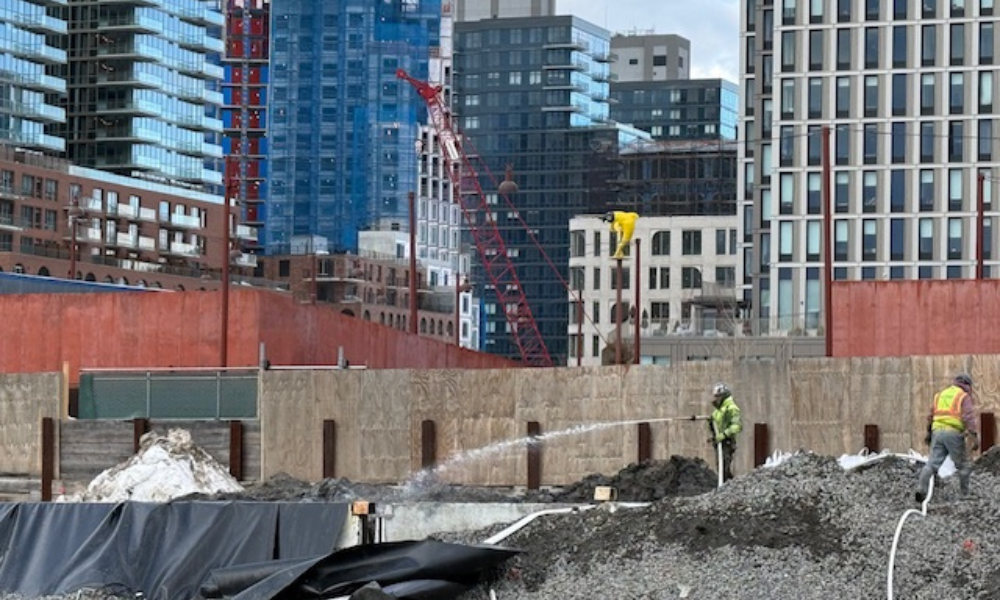
Wide Shot of 175 Third Street Superfund Site in Brooklyn

Charney Operators utilizes Remedia Hydro-Applicator
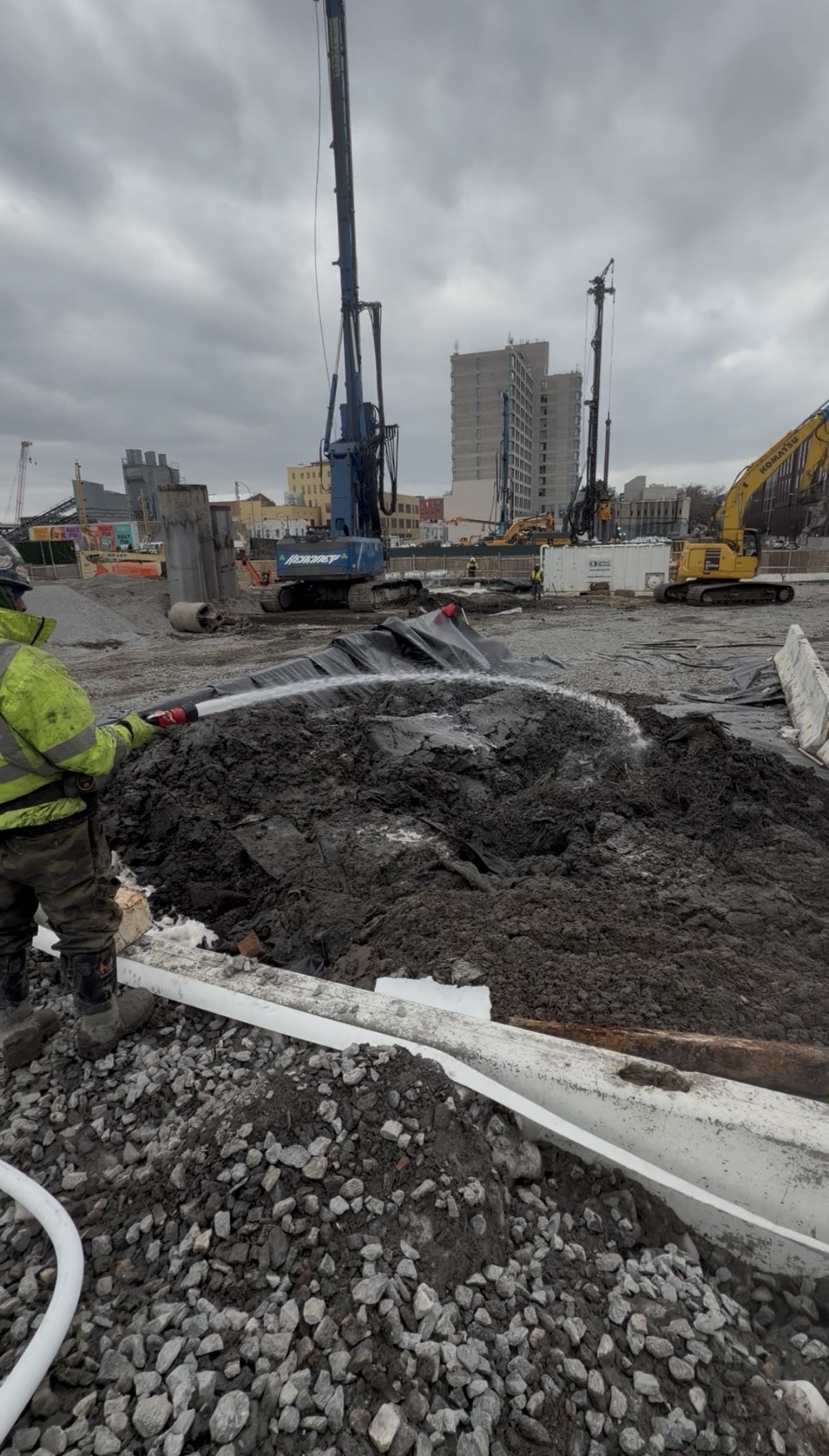
Operators apply Remedia solution to stockpile
Patented Aqueous Catalyst™ Technology Platform Enables Compliant, Community-Safe Remediation Within the Gowanus Canal Superfund Corridor
BROOKLYN, NY, UNITED STATES, May 29, 2026 /EINPresswire.com/ -- Remedia is proud to announce the successful implementation of its hydrocarbon mitigation, contamination stabilization, and odor control technologies at the 175 Third Street redevelopment project in Brooklyn, New York. Situated within the Gowanus Canal Superfund area—one of the most closely watched environmental remediation corridors in the United States—the project demanded cutting-edge in-situ treatment solutions capable of addressing deeply complex soil and groundwater contamination while maintaining strict regulatory compliance and safeguarding the surrounding community from airborne contaminants and nuisance odors.The 175 Third Street site is being generally contracted by Charney Companies, with environmental consulting services provided by Impact Environmental. The redevelopment represents one of the most ambitious construction undertakings currently in progress within the Gowanus corridor, a neighborhood undergoing rapid transformation from its industrial past into a mixed-use residential and commercial district. However, decades of industrial activity along the canal have left behind a legacy of significant subsurface contamination—including hydrocarbons, volatile organic compounds, coal tar deposits, and petroleum impacts—that must be carefully managed before any construction can safely proceed.
A High-Profile Site With Complex Environmental Demands
The Gowanus Canal has been designated a Superfund site by the United States Environmental Protection Agency since 2010, reflecting the severity and extent of contamination accumulated over more than a century of heavy industrial use. The canal and its surrounding parcels have historically hosted manufactured gas plants, chemical processing facilities, and petroleum storage operations, all of which have contributed to a dense matrix of subsurface contaminants that complicate any redevelopment effort.
For project teams working within this corridor, the challenges extend well beyond standard construction logistics. Every excavation event, soil movement, and material handling operation has the potential to release volatile organic compounds and odorous gases into the air, posing risks to worker health, neighboring residents, and regulatory standing. Traditional mitigation approaches—such as foam suppression, tarping, and perimeter air monitoring alone—often prove insufficient for sites with this level of contamination complexity. These reactive methods address symptoms after contaminants have already become airborne, creating a perpetual cycle of detection, response, and disruption that slows project timelines and strains community relations.
What was needed at 175 Third Street was a fundamentally different approach—a proactive, source-level treatment methodology that could neutralize contaminants within the soil matrix before they ever became an airborne problem. The project required a technology partner capable of working within the demanding operational tempo of an active construction site while delivering the environmental performance that federal, state, and city regulators expect at a Superfund location of this profile.
Deploying the Aqueous Catalyst™ Technology Platform
Remedia answered that need by deploying its patented Aqueous Catalyst™ technology platform—a proprietary in-situ treatment system designed to address contamination at the source, within the soil matrix, before excavation and material handling activities disturb impacted materials. The platform delivered a comprehensive suite of remediation capabilities at the 175 Third Street site, including hydrocarbon mitigation and stabilization prior to and during material handling, VOC suppression and off-gas control during active excavation activities, coal tar and petroleum impact mitigation within impacted soils, and comprehensive odor mitigation to ensure both community protection and full regulatory compliance.
The core principle behind the Aqueous Catalyst™ platform is treating contamination in place—before it becomes a problem at the surface. By applying the technology directly to impacted soils ahead of excavation, Remedia’s system reduces the off-gassing potential of disturbed materials, lowers the concentration of volatile compounds released into the working environment, and diminishes the intensity of odor emissions that would otherwise affect the surrounding neighborhood. This source-level treatment approach represents a fundamental shift from reactive mitigation—where problems are managed after they occur—to proactive remediation that prevents exposure events from happening in the first place.
Measurable Results in a Demanding Environment
The results at 175 Third Street were significant. By treating impacted soils in situ before excavation and material movement, Remedia’s technology reduced the overall off-gassing potential of disturbed soils, minimized the project team’s reliance on secondary controls such as foam applications and tarping systems, and enabled more efficient soil handling operations that kept the construction schedule on track. The integrated odor control systems further ensured that surrounding residential buildings, commercial establishments, and public spaces were protected from nuisance odors throughout active remediation—a critical requirement for any project operating in a densely populated urban neighborhood.
For the general contractor, Charney Companies, and the environmental consultant, Impact Environmental, Remedia’s technology provided a reliable, field-proven layer of protection that complemented existing site controls and enhanced the project’s overall environmental performance. The ability to stabilize contaminants ahead of construction activities gave the project team greater operational flexibility, allowing excavation work to proceed at pace without the delays and disruptions that often accompany volatile site conditions at Superfund locations. In practical terms, this meant fewer work stoppages triggered by odor complaints or air quality exceedances, reduced material costs associated with foam and tarp applications, and a more predictable construction schedule—outcomes that translate directly into cost savings and stakeholder confidence for the development team.
"Our role at 175 Third Street demonstrates how in-situ mitigation technologies can support complex Superfund redevelopment projects in ways that traditional reactive approaches simply cannot match." said Wyatt Schwab of Remedia "By stabilizing contaminants before they become an air quality or compliance issue, we help project teams accelerate remediation schedules while maintaining the environmental and community safeguards that regulators and residents alike demand. Our philosophy has always been to treat the source, not the symptoms—and this project is a powerful example of that principle in action."
Maintaining Regulatory Compliance and Community Trust
Operating within a federally designated Superfund zone places extraordinary regulatory demands on every stakeholder involved in a redevelopment project. Air quality monitoring, odor complaint thresholds, worker exposure limits, and community notification requirements all impose tight operational constraints that can slow progress or halt work entirely if not proactively managed. At 175 Third Street, Remedia’s technology served as a critical compliance tool, helping the project team maintain continuous adherence to EPA standards, New York State Department of Environmental Conservation protocols, and New York City Department of Environmental Protection requirements throughout the remediation phase.
Equally important was the role Remedia’s odor mitigation systems played in preserving community trust. The Gowanus neighborhood has experienced significant residential growth in recent years, with new apartment buildings, restaurants, and retail establishments opening within blocks of active remediation sites. Residents and business owners living and working adjacent to these sites are acutely sensitive to environmental disruptions, and odor complaints can quickly escalate into regulatory enforcement actions, project shutdowns, and negative media coverage that undermines public support for redevelopment. By suppressing odor emissions at the source rather than relying solely on perimeter monitoring and after-the-fact response, Remedia helped ensure that the 175 Third Street project operated as a responsible neighbor—minimizing the impact of necessary remediation work on the daily lives of surrounding residents and business owners while maintaining the social license to operate that is essential for any long-term urban redevelopment effort.
A Model for Superfund and Brownfield Redevelopment Nationwide
The success at 175 Third Street reflects Remedia’s continued commitment to supporting brownfield and Superfund redevelopment projects across the country. Through close collaboration with developers, environmental engineers, general contractors, and regulatory agencies, Remedia provides scalable, field-deployable technologies designed to integrate seamlessly into active construction workflows without disrupting project timelines or budgets. As redevelopment continues throughout the Gowanus corridor and similar environmentally impacted urban areas nationwide, Remedia remains focused on delivering innovative, compliant, and field-proven solutions that enable responsible urban revitalization.
The company is actively engaged with project teams at multiple Superfund and brownfield sites across the eastern seaboard and beyond, bringing the same source-level treatment philosophy and Aqueous Catalyst™ technology platform to projects ranging from former industrial complexes and decommissioned fuel storage facilities to urban infill developments built atop legacy contamination. Each engagement reinforces the lesson demonstrated at 175 Third Street: that proactive, in-situ contaminant stabilization is not merely an alternative to traditional reactive controls but a superior methodology that protects communities, satisfies regulators, and keeps construction moving forward. For developers and contractors navigating the unique challenges of building on impacted land, Remedia offers a proven partner with the technology, field experience, and regulatory understanding to turn environmental liabilities into viable development opportunities.
About Remedia
Remedia is a leading provider of in-situ contamination mitigation technologies for industrial, brownfield, and Superfund sites. Its patented Aqueous Catalyst™ platform addresses hydrocarbons, volatile organic compounds, polychlorinated biphenyls, coal tar, odor impacts, and other environmental contaminants, helping project teams enhance safety, compliance, and operational efficiency during remediation and construction operations. For more information, visit www.remedia.global.
Wyatt Schwab
Remedia International, Inc.
+1 302-345-4468
email us here
Legal Disclaimer:
EIN Presswire provides this news content "as is" without warranty of any kind. We do not accept any responsibility or liability for the accuracy, content, images, videos, licenses, completeness, legality, or reliability of the information contained in this article. If you have any complaints or copyright issues related to this article, kindly contact the author above.
