

Done Right HFS and Filta Kleen Technicians Highlight The Need for Improved Hood Cleaning Services in Commercial Kitchens

A Filta Kleen Hood Cleaning Specialist Cleaning a Commercial Air-Duct.

A dirty exhaust duct that is about to be cleaned by a Filta Kleen technician
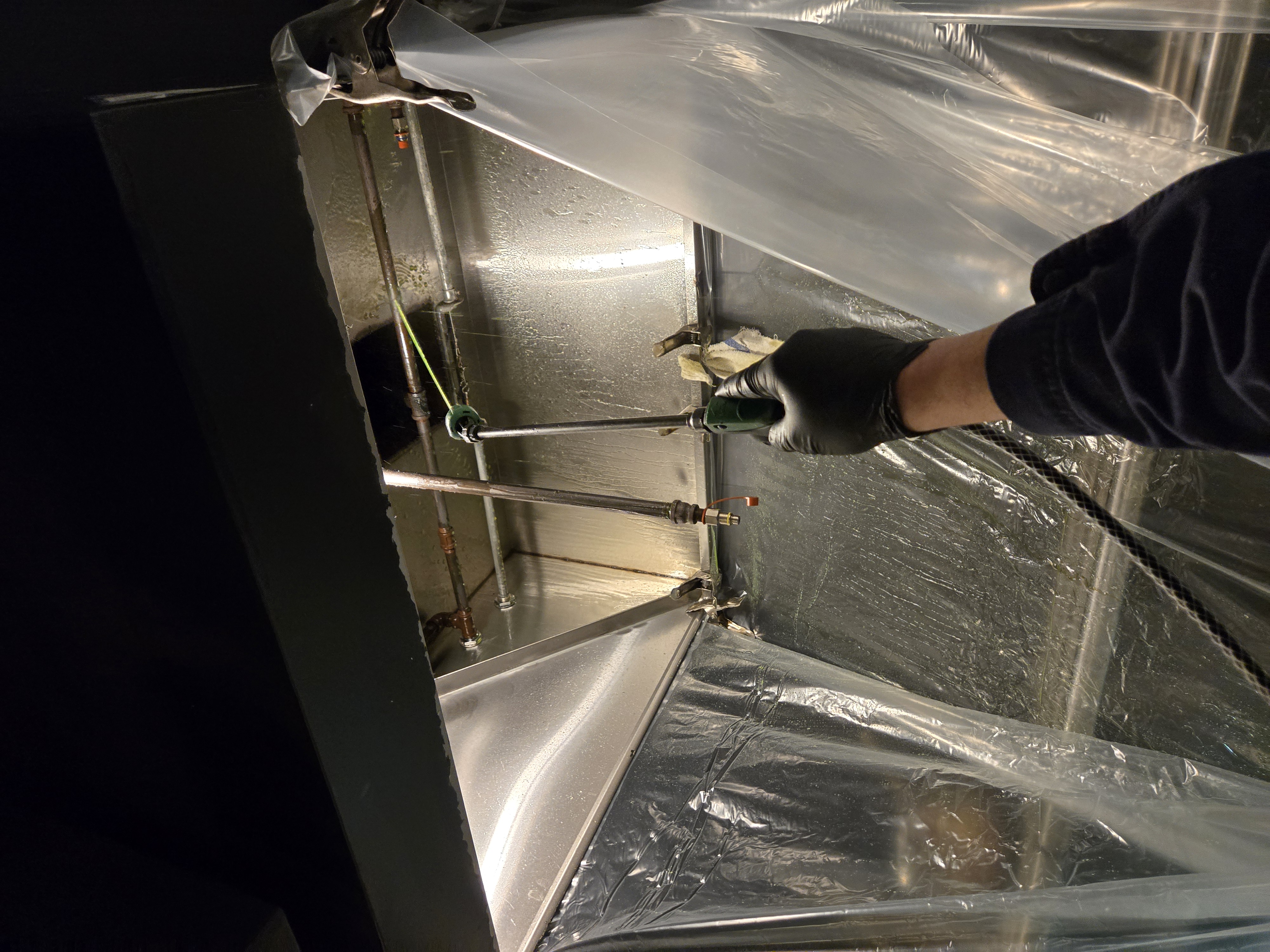
A Done Right hood cleaning specialist cleaning a commercial kitchens canopy at a local restaurant
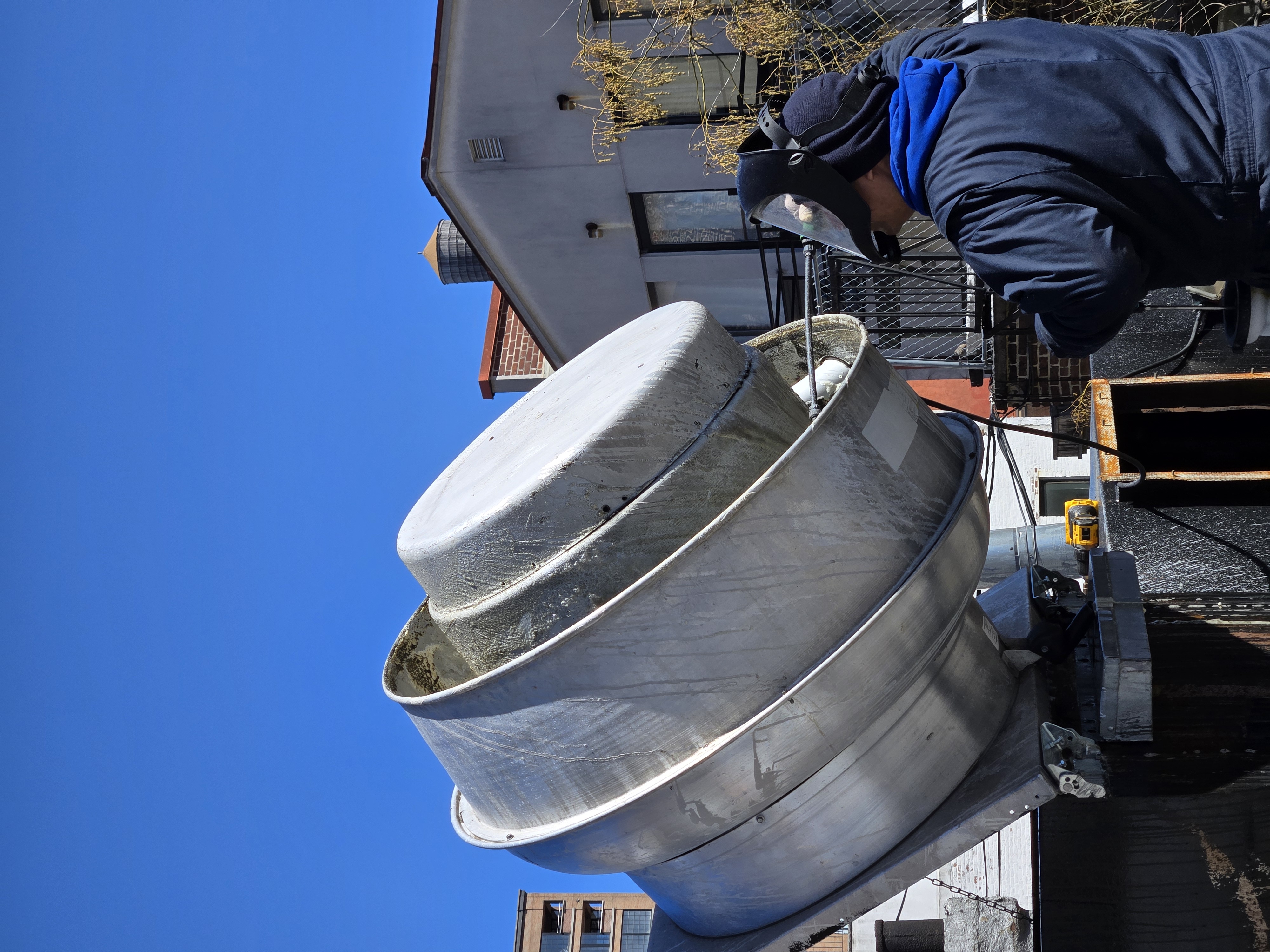
Grease doesn't stand a chance—expert hood cleaning high above Midtown keeps kitchens safe and city-compliant.
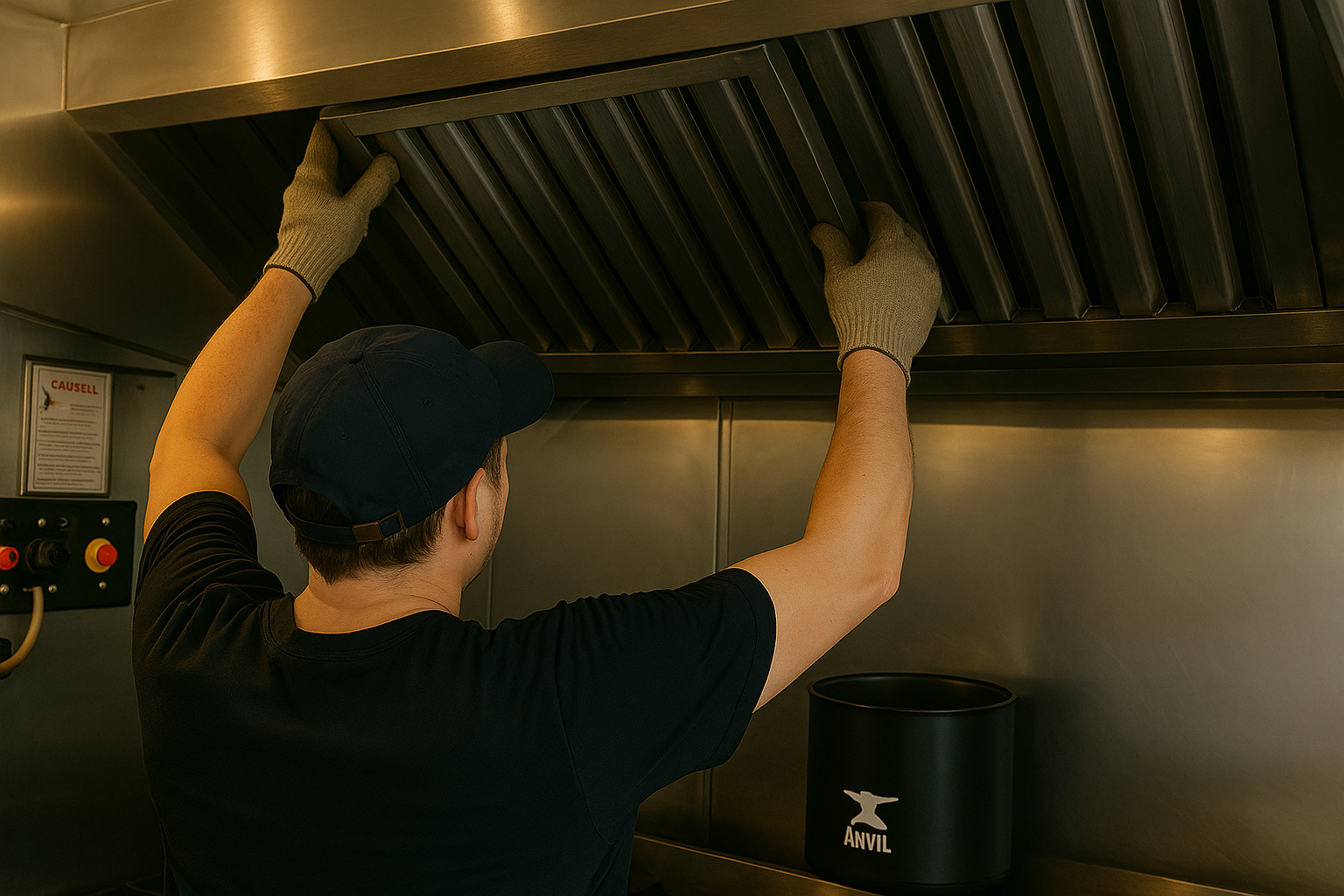
A Done Right worker installing a commercial kitchen hood at a Miami restaurant
A growing fire safety and compliance concern is emerging across corporate kitchens and restaurants in both New York City and South Florida.
BROOKLYN, NY, UNITED STATES, April 16, 2026 /EINPresswire.com/ -- A growing safety and compliance concern is emerging across corporate kitchens and restaurants in both New York City and South Florida, as industry professionals warn that inconsistent hood cleaning service schedules and delayed maintenance are increasing fire risks and operational failures. Technicians from Done Right Hood & Fire Safety and Filta Kleen are calling attention to what they describe as a systemic issue: the underestimation of restaurant grease removal and exhaust system maintenance as critical safety functions rather than routine upkeep.Commercial kitchen exhaust systems are designed to remove heat, smoke, and grease-laden vapors generated during cooking, but without consistent cleaning and maintenance, these same systems can become one of the most dangerous components in a facility. Grease accumulates inside hoods, ductwork, and exhaust fans, creating a flammable layer that can ignite under high temperatures and rapidly spread fire throughout the building.
According to fire safety data, cooking equipment is responsible for more than 60% of fires in eating and drinking establishments, with grease buildup playing a significant role in fire spread and severity. The National Fire Protection Association has further identified that failure to properly clean exhaust systems contributes to approximately 22% of restaurant fires, making inadequate maintenance one of the most preventable causes of commercial kitchen incidents.
Despite these findings, many operators in high-density markets such as New York City and hospitality-heavy regions of Florida continue to treat hood cleaning as a secondary concern, often delaying service until visible buildup or operational issues arise. Industry experts argue that this reactive approach is contributing to a growing number of avoidable hazards.
“Too many kitchens are waiting until there’s a visible problem before scheduling a hood cleaning service,” said a senior technician at Done Right Hood & Fire Safety. “By the time you can see the grease, it’s already built up in areas you can’t see, like the ductwork and fan. That’s where the real danger is.”
The risks associated with neglecting hood cleaning extend beyond fire hazards. Grease accumulation can restrict airflow, reduce ventilation efficiency, and increase internal temperatures within the kitchen. This not only creates uncomfortable and potentially unsafe working conditions but also places additional strain on mechanical components, leading to premature wear and the need for costly exhaust system repairs.
In urban environments like New York City, these risks are compounded by building density and shared infrastructure. A fire that begins in a commercial kitchen exhaust system can quickly spread through ductwork and reach the roof, potentially impacting multiple tenants and adjacent structures. According to industry estimates, nearly 11,000 commercial kitchens are damaged by fire annually, often due to conditions that allow flames to travel through grease-laden exhaust systems.
“In NYC especially, you’re not just protecting your kitchen—you’re protecting the entire building,” said a Done Right Hood & Fire Safety technician. “If a fire gets into the exhaust system, it can move fast and affect floors above and around you before anyone has time to react.”
South Florida presents a different but equally pressing set of challenges. The region’s high humidity, year-round cooking demand, and concentration of hospitality venues accelerate grease accumulation and system wear. In areas like Miami and Fort Lauderdale, kitchens often operate continuously, leaving little margin for delayed maintenance.
A Filta Kleen technician working in the Florida market noted, “In high-volume kitchens down here, grease doesn’t build up over months—it builds up over weeks. If restaurant grease removal isn’t handled consistently, you’re looking at serious airflow issues and a much higher fire risk.”
Industry standards such as NFPA 96 establish clear guidelines for inspection and cleaning frequencies based on cooking volume, with high-volume operations requiring cleaning as frequently as quarterly or even monthly. However, adherence to these standards varies widely, particularly among smaller operators and facilities that lack dedicated compliance oversight.
Corporate kitchens—including those in office buildings, hospitals, and universities—are increasingly under pressure to maintain stricter compliance due to the scale of their operations and the number of occupants they serve. These facilities often rely on experienced commercial kitchen hood installers and service providers to ensure that systems are designed for proper airflow, grease capture, and long-term maintainability.
“Design and maintenance go hand in hand,” said a Filta Kleen technician. “Even the best system won’t perform safely if it’s not cleaned and maintained correctly. That’s why working with qualified commercial kitchen hood installers is critical from the start.”
Another often-overlooked risk of inadequate cleaning is its impact on fire suppression systems. Grease buildup can obstruct nozzles and sensors, preventing suppression systems from activating properly in the event of a fire. This undermines one of the primary safety mechanisms designed to contain and extinguish kitchen fires.
“When grease blocks suppression nozzles, you’re essentially disabling your first line of defense,” explained a Done Right Hood & Fire Safety technician. “At that point, a small flare-up can turn into a full-scale fire.”
The financial implications of these risks are substantial. Restaurant fires result in an estimated $165 million in property damage annually, with many businesses facing extended closures or permanent shutdowns following a major incident. Beyond direct losses, operators may encounter increased insurance premiums, regulatory penalties, and reputational damage that can take years to recover from.
Exhaust system inefficiencies also contribute to rising operational costs. Systems burdened by grease buildup require more energy to maintain airflow, increasing utility expenses and reducing overall equipment lifespan. Over time, this leads to a cycle of escalating maintenance costs and declining performance.
“Neglecting routine hood cleaning service doesn’t save money—it just shifts the cost to bigger, more expensive problems later,” said a Filta Kleen technician. “We see it all the time: what could have been a standard cleaning turns into major exhaust system repairs.”
In response to these challenges, industry professionals are emphasizing the importance of proactive maintenance strategies that prioritize consistent cleaning schedules, thorough inspections, and timely repairs. This includes not only visible components such as hood surfaces but also the internal ductwork and rooftop exhaust fans where grease accumulation is often most severe.
Advanced cleaning methods now incorporate high-pressure washing, specialized degreasers, and detailed inspections to ensure systems are cleaned to bare metal standards. This level of service is critical for meeting compliance requirements and minimizing fire risk.
“True restaurant grease removal isn’t just about making the hood look clean,” said a Done Right Hood & Fire Safety technician. “It’s about eliminating the hidden buildup that can turn your exhaust system into a fire hazard.”
The issue has also drawn attention from fire safety authorities, who continue to stress the importance of regular maintenance as a key factor in reducing commercial kitchen fires. Grease residue can become combustible at relatively low temperatures compared to active cooking flames, allowing fires to ignite and spread quickly through exhaust systems if not properly managed.
As the restaurant and hospitality industries continue to evolve, particularly in high-demand markets like NYC and Florida, the role of hood cleaning services is becoming increasingly central to safe and efficient operations. Industry leaders are calling for greater awareness, stricter adherence to established standards, and a shift in how operators view maintenance—not as a periodic obligation, but as an integral part of daily operations.
“Every kitchen generates grease, and every kitchen needs a plan to manage it,” said a Done Right Hood & Fire Safety technician. “The difference between a safe operation and a dangerous one often comes down to how seriously that responsibility is taken.”
Filta Kleen technicians echoed this sentiment, emphasizing that consistent service and proper system design are essential for long-term safety and performance. “If you stay ahead of the buildup, you stay ahead of the risk,” one technician said. “But if you let it accumulate, it’s only a matter of time before it creates a problem.”
With increasing regulatory scrutiny and a growing awareness of fire safety risks, industry experts expect demand for professional hood cleaning services, commercial kitchen hood installers, restaurant grease removal, and exhaust system repairs to continue rising in both NYC and Florida markets.
The message from technicians is clear: proactive maintenance is not just a best practice—it is a necessity. By prioritizing consistent hood cleaning service schedules, investing in professional expertise, and addressing issues before they escalate, operators can protect their staff, their customers, and their businesses from the preventable risks associated with grease buildup and system neglect.
Gabriel Jean
Safety Group
+1 212-660-3232
email us here
Visit us on social media:
LinkedIn
Instagram
Facebook
YouTube
Legal Disclaimer:
EIN Presswire provides this news content "as is" without warranty of any kind. We do not accept any responsibility or liability for the accuracy, content, images, videos, licenses, completeness, legality, or reliability of the information contained in this article. If you have any complaints or copyright issues related to this article, kindly contact the author above.
